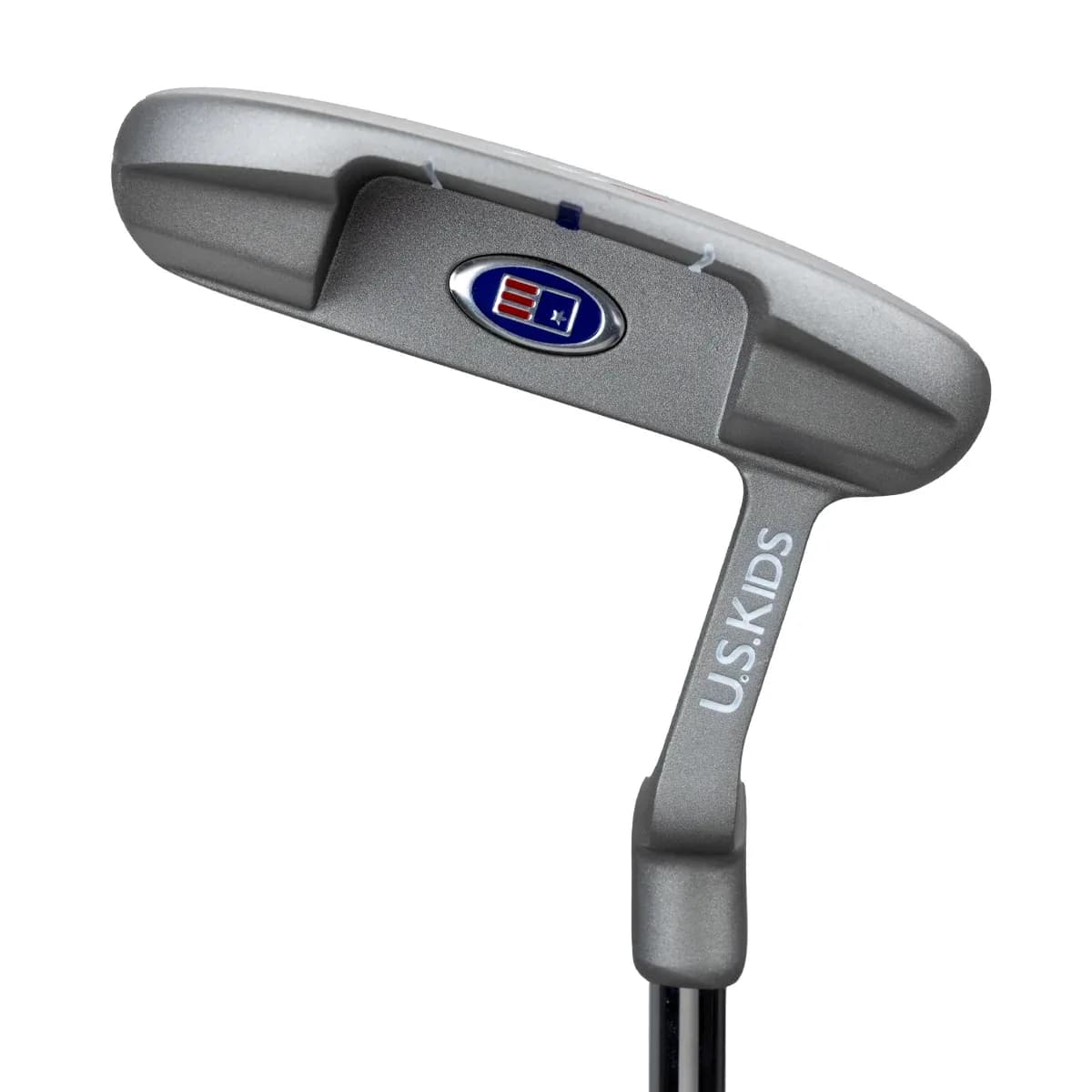
The best putters are the ones that suit your stroke: blade putters suit a straight-back-straight-through stroke, mallets suit an arcing stroke or help with alignment, and beginners usually do best with a forgiving mallet. This guide covers the types of golf putters, how to get fitted and what beginners should choose.
The best putters: how to choose
| Putter type | Shape | Suits | Main benefit |
|---|---|---|---|
| Blade | Slim, compact head | Straighter or lightly arcing strokes | Feel and feedback |
| Mallet | Larger, deeper head | Arcing strokes and most beginners | Forgiveness and alignment |
| High-MOI mallet | Wide head with weight at the edges | Anyone who mishits | Stability on off-centre hits |
| Belly or long putter | Longer shaft | Players who want a different set-up | Stable base against the body |
Types of golf putters
The two main types are the blade and the mallet. A blade putter is slim with a toe-hang, which means the toe of the putter droops when you balance the shaft. That suits a stroke that arcs. A mallet is larger and usually face-balanced, which suits a straighter stroke and helps keep the face square. Neck styles, such as plumber's neck or slant neck, change how the shaft joins the head and affect feel and toe-hang.
Best beginner putters
For a beginner, forgiveness matters most. A mallet putter tolerates off-centre strikes and often has alignment lines that help you aim. Look for:
- A standard length that suits your height and posture.
- A comfortable grip you can hold lightly.
- A head shape you find easy to line up.
Premium putters: are they worth it?
A more expensive putter can offer finer milling, better materials and more choice of shape, but it will not fix a poor stroke. Many golfers improve more by buying a putter that suits them and practising on a putting mat than by spending more on the club.
Length, loft and lie
Most putters have a few degrees of loft, usually 3 to 4. The length should let you stand comfortably over the ball with your eyes roughly over the ball line. If you are unsure, a fitting session will check length, lie and loft against your stroke.
How to practise putting at home
A short routine at home does more for your scores than a new putter. A Golf Putting Mat is $89, and you can set up a few simple drills:
- Gate drill. Place two tees just wider than the putter head and stroke through them.
- Short putt ladder. Hole 10 putts from one metre before you step back.
- Lag drill. Roll putts to a line three to six metres away and aim to stop them close.
Questions to ask before you buy a putter
- Does the length let you stand comfortably, eyes roughly over the ball?
- Can you line up the head easily?
- Do you like the sound and feel at impact?
- Is the grip comfortable and not too thick or thin?
- Is the weight right for your stroke?
If you cannot test it in a shop, buy from a retailer with a clear returns policy: see our returns page.
Which putter suits you?
| If you... | Choose | Why |
|---|---|---|
| Are a beginner | A mallet with alignment lines | Forgiving and easy to line up |
| Have a strongly arcing stroke | A blade or toe-hang putter | The toe swings through naturally |
| Have a straighter stroke | A face-balanced putter | Stays square through the stroke |
| Miss a lot on the toe or heel | A high-MOI mallet | Stable on off-centre hits |
Glossary: putter terms
- MOI: resistance to twisting. A higher MOI is more forgiving.
- Toe hang: how much the toe of the putter droops when you balance the shaft on a finger.
- Face-balanced: the face points straight up when balanced.
- Offset: the shaft sits ahead of the face, which can help you see the ball line.
- Lie angle: the angle between the shaft and the ground when the sole sits flat.
Common putter mistakes
- Buying on looks alone, without checking length and head shape.
- Using a putter that is too long, which pushes your eyes outside the ball line.
- Gripping too tightly, which kills feel and distance control.
- Changing putters every few weeks instead of practising with one.
- Ignoring alignment: if you cannot line it up, you will not hole putts.
Looking after a putter
Use a head cover, wipe the face after use and keep the grip clean. Do not toss the putter into the bag or the boot, since dents in the face affect roll. If the grip gets shiny or hard, replace it before it changes how you hold the club.
Our putter
We stock a Golf Putter at $199. Practice at home with a Golf Putting Mat at $89. See our golf putters and wedges, our complete golf club sets and our guide to junior golf clubs for children's putters. Call 0480 811 308 for help.